




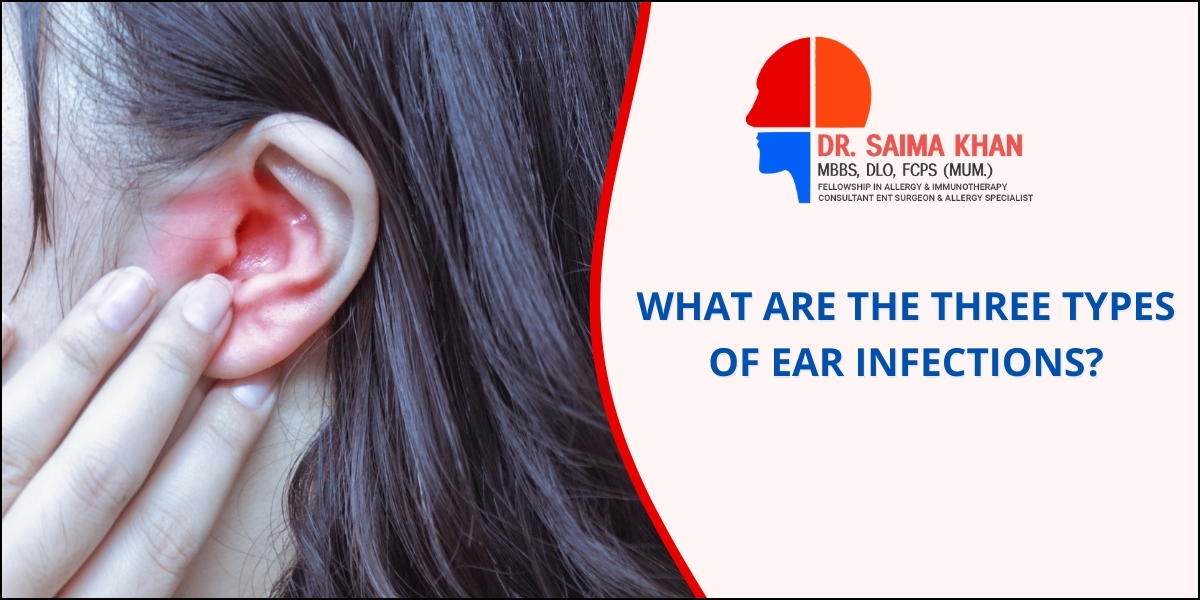
Ear infections are very common and can affect children as well as adults. They usually happen when bacteria or viruses cause swelling and fluid build-up inside the ear. This can lead to pain, hearing problems, and sometimes fever.
There are three main types of ear infections depending on which part of the ear is affected:
1. Outer Ear Infection (Otitis Externa)
This infection affects the outer part of the ear, including the ear canal. It is commonly known as “Swimmer’s Ear.”
Why does it happen?
- Water trapped in the ear after swimming or bathing
- Using cotton buds or sharp objects inside the ear
- Scratching or injury to the ear canal
Common Symptoms:
- Ear pain (especially when touching the ear)
- Itching inside the ear
- Redness and swelling
- Fluid discharge
- Mild hearing difficulty
Outer ear infections are usually not serious but can become painful if not treated early.
2. Middle Ear Infection (Otitis Media)
This is the most common type of ear infection, especially in children. It affects the space behind the eardrum.
Why does it happen?
- Cold or flu
- Sinus infections
- Blocked Eustachian tube
- Throat infections
When fluid gets trapped behind the eardrum, bacteria can grow and cause infection.
Common Symptoms:
- Ear pain
- Fever
- Hearing problems
- Feeling of fullness in the ear
- Irritability in children
- Fluid coming from the ear (in severe cases)
Middle ear infections may need medical treatment, and sometimes antibiotics are required. Ear drum can rupture or even the bones behind the ear drum can get eroded in Otitis media, which may need surgical correction
3. Inner Ear Infection (Labyrinthitis)
This type of infection affects the inner ear, which controls balance and hearing.
Why does it happen?
- Viral infections
- After a severe cold or flu
- Sometimes due to untreated middle ear infection
Common Symptoms:
- Dizziness (vertigo)
- Nausea or vomiting
- Balance problems
- Hearing loss
- Ringing sound in the ear (tinnitus)
Inner ear infections can affect balance seriously and should be treated promptly.
When Should You See a Doctor?
You should consult a doctor if:
- Ear pain lasts more than 1–2 days
- There is high fever
- You notice fluid or pus from the ear
- Hearing suddenly becomes worse
- You feel severe dizziness
Early treatment helps prevent complications and protects your hearing.
Consult Dr. Saima Khan – ENT Specialist in Thane West
If you are experiencing ear pain, hearing issues, sinus problems, or throat discomfort. Dr. Saima Khan – ENT Specialist in Thane West provides expert diagnosis and advanced treatment for all types of ear infections.
Frequently Asked Questions (FAQs)
1. Why is the ear infection more common in smaller children and how to prevent it?
The tube which connects the throat and ear of the children ( mostly infants and toddlers) is shorter and more horizontal, hence there are more chances of throat infections or even milk spilling inside the tube if the baby is fed in a lying down position.
Prevention:
Keep the head of the baby tilted up while feeding and immediately after feeding, take the baby on your shoulder to help it burp and keep it upright for next 10min at least ( even if burp happens immediately)
This position makes sure that no milk regurgitation enters the tubes
2. Can an ear infection go away on its own?
Some mild ear infections, especially viral ones, may improve on their own. However, if symptoms worsen or last more than 1–2 days, you should consult a doctor.
3. Is ear pain always a sign of infection?
Not always. Ear pain can also be caused by sinus issues, throat infections, or jaw problems & dental pain. A proper medical check-up helps find the exact cause.
4. How can I prevent ear infections?
Avoid inserting objects into your ears, keep ears dry after swimming, treat colds early, and maintain good hygiene to reduce the risk of infection. Avoid blowing air inside your ears to open them up if you feel blockage.
Reference Article Link – https://www.cdc.gov/ear-infection/about/index.html


